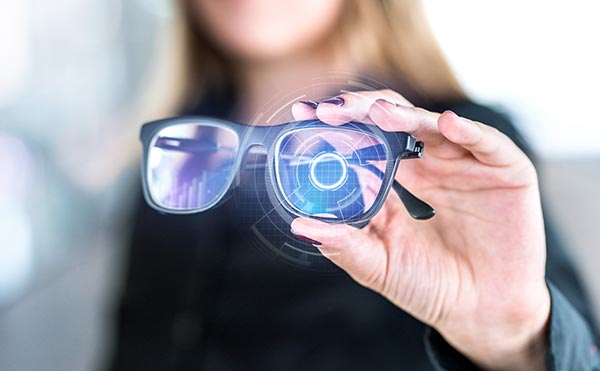
Meta plots facial recognition for smart glasses amid political tumult
02/17/2026 / By Willow Tohi
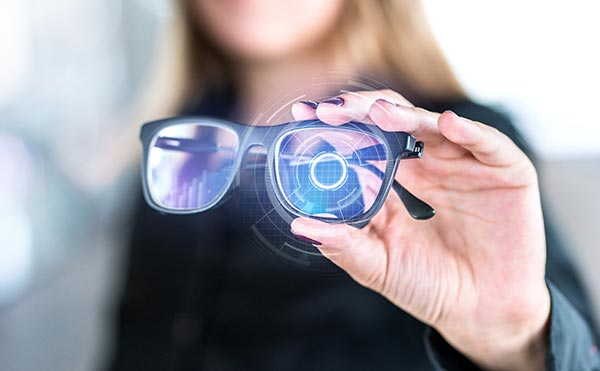
- Meta is considering adding facial recognition to its Ray-Ban smart glasses, a feature that would allow wearers to identify strangers.
- An internal document suggests the company may time the launch to exploit periods of political distraction when civil liberties groups are less able to mount opposition.
- The technology would scan faces without consent, creating sensitive biometric “faceprints” of unsuspecting bystanders in public and private spaces.
- Meta has a history of costly legal settlements, totaling nearly $7 billion, related to previous facial recognition systems deemed deceptive or non-consensual.
- The plan faces significant legal hurdles, as many states now require affirmative consent for biometric data collection, which is impossible to obtain from random passersby.
In a move that privacy advocates have long feared, Meta is actively developing facial recognition technology for its popular Ray-Ban smart glasses. According to internal documents obtained by The New York Times, the company is not only advancing the controversial feature but is strategically considering launching it during a period of intense political upheaval. The goal, as stated in a company memo, is to exploit a moment when civil society watchdogs are “focused on other concerns,” thereby minimizing organized opposition to a product that would fundamentally alter public anonymity.
The blueprint for biometric surveillance
The proposed feature, internally dubbed “Name Tag,” would allow a wearer of Meta’s camera-equipped glasses to scan the face of any individual within view. The system would then match the scan against a database to provide identifying information via Meta’s AI assistant. This transforms a consumer wearable into a portable biometric scanner, capable of harvesting “faceprints” from every passerby, subway rider, or café patron who inadvertently enters its frame—all without their knowledge or consent.
This represents a seismic shift in the application of facial recognition. Unlike stationary cameras or government databases, embedding this capability into millions of consumer devices normalizes biometric surveillance, moving it from controlled environments into every corner of daily life. A faceprint is uniquely sensitive data; unlike a compromised password, it is permanent and immutable, creating a lifelong digital trail linked to a person’s physical presence.
A history of violations and billions in penalties
Meta’s foray into this arena is not new, and its track record is littered with legal and ethical failures. The company previously operated a facial recognition system on Facebook for photo tagging, which it shuttered in 2021 following immense public and legal pressure. That retreat came only after a series of staggering financial penalties:
- A $5 billion settlement with the Federal Trade Commission in 2019 over deceptive privacy practices, including those related to facial recognition.
- A $650 million class-action settlement in 2021 under Illinois’s stringent Biometric Information Privacy Act (BIPA).
- A $1.4 billion settlement with Texas in 2024 over the same defunct system.
Collectively, these settlements, totaling nearly $7 billion, served as a clear market verdict on non-consensual biometric data collection. The proposed smart glasses feature would replicate these violations on a potentially vast scale, ignoring the legal precedent that affirmative, informed consent is required before collecting such data—a standard impossible to meet with unwitting bystanders.
The internal calculus: Controversy as a scheduling problem
The most revealing aspect of the internal document is not the technology itself, but Meta’s calculated strategy for its release. The memo explicitly frames the “civil liberties backlash” not as a reason to reconsider, but as a logistical hurdle to navigate. By targeting a launch during a “dynamic political environment,” the company bet that public attention and advocacy resources would be too fragmented to mount an effective defense of privacy rights.
This cynical calculation treats profound questions of civil liberty and personal autonomy as mere public relations challenges to be managed. It suggests a corporate philosophy that views legal settlements as a cost of business rather than a mandate to change course, and public trust as a variable to be manipulated through timing.
Mounting resistance in a wary landscape
Meta’s assumption that the public is too distracted to care may be a profound miscalculation. In the years since its previous facial recognition debacle, societal awareness of and resistance to biometric surveillance has grown. Backlash against products like Amazon’s Ring has demonstrated increased public skepticism. Dozens of states have followed Illinois’s lead in enacting robust biometric privacy laws, creating a more hostile legal landscape.
Furthermore, the very disclosure of Meta’s internal strategy is likely to galvanize, not preempt, opposition. Advocacy groups, legislators and a privacy-conscious public are now forewarned of a plan to introduce mass surveillance tools through consumer electronics. The report itself provides a rallying point, undermining any attempt at a stealth rollout.
A future of anonymity in the balance
The debate over Meta’s smart glasses is about more than a single product feature; it is a referendum on the future of privacy in public spaces. The company’s internal deliberations reveal a willingness to leverage societal distraction to advance a technology that erodes the “practical anonymity” essential to a free society. With a documented history of privacy failures and a strategy that prioritizes opportunism over ethics, Meta’s plans face a critical junction. The coming months will test whether legal frameworks, market pressure and an alert citizenry can uphold the boundary between technological innovation and the fundamental right to move through the world without being automatically identified, tracked and cataloged by corporate algorithms.
Sources for this article include:
Submit a correction >>
Tagged Under:
Big Tech, biometric data collection, biometrics, civil liberty, computing, cyberwar, Digital privacy, distraction, Facial recognition, Glitch, information technology, meta, privacy watch, products, smart glasses, surveillance, technocrats, Twisted
This article may contain statements that reflect the opinion of the author
RECENT NEWS & ARTICLES